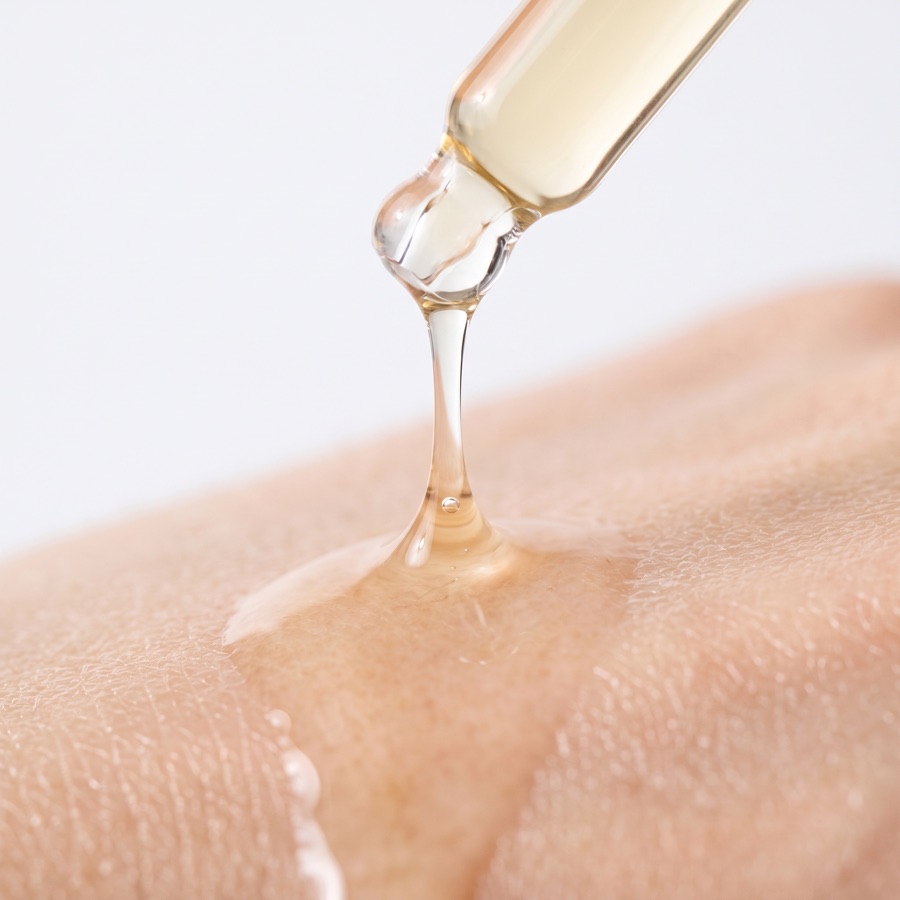
Ozonated olive oil is olive oil that has had medical-grade ozone bubbled through it until the oxygen bonds into its fatty acids as stable compounds called ozonides. If you want the chemistry, the smell, and the peroxide-value explainer, start with what is ozonated olive oil; this article is about what it does for skin and how to use it.
The benefits of ozonated olive oil in skincare are cosmetic, and they are real: it replenishes moisture, it comforts skin that feels tight or stings, it softens the look of redness, and it supports the look and feel of the skin barrier while that barrier recovers from too many actives. It is also one of the most versatile jars in the house. What it is not is a treatment for any skin condition, and we will say so plainly further down.
What are the benefits of ozonated olive oil?
Seven we are comfortable putting our name to. Each is about how skin looks and feels, the only kind of promise a cosmetic should make.
1. Moisture that lasts through the night
Ozonated olive oil is a concentrated lipid. Pressed into slightly damp skin, it slows water loss from the surface and leaves skin feeling moisturized until morning instead of tight by midnight. In OzoMD Ozonated Elixir Oil, the ozonated olive oil is carried in squalane, jojoba, sunflower and rosehip, which are lighter lipids that help the oil spread thin and sink in rather than sit as a film.
2. Comfort for skin that feels tight, dry or stung
Skin that has been pushed too hard by retinol, acids or a peel feels tight after cleansing and stings when ordinary products go on. A fragrance-free oil with nothing in it to react to lets that skin feel cushioned and comfortable again. Comfort is a feeling, and it is immediate.
3. A softer look of redness
Parched, over-treated skin tends to look flushed. As moisture returns and skin stops feeling irritated by every product, the look of redness softens and the complexion appears more even. That is an appearance benefit from a well-moisturized barrier, which is exactly what it sounds like, and nothing more.
4. Support for the skin barrier as it recovers
The skin barrier is the outermost layer of skin: cells held together by lipids, keeping water in and the outside world out. Actives and over-cleansing strip it. A rich, simple oil replaces some of what was lost at the surface, so the barrier looks and feels more resilient while your routine gives it a rest. Our guide to a damaged skin barrier explains the signs and the recovery routine in full.
5. One jar for the whole body
Face, hands, lips, cuticles, elbows, heels, beard: the same two or three drops work everywhere, which is why we call it the one jar every home keeps. A 2 fl oz jar of OzoMD Ozonated Elixir Oil is roughly 400 uses, about 19 cents each.
6. Few ingredients, nothing to decode
OzoMD Ozonated Elixir Oil has five: ozonated olive oil, squalane, jojoba, sunflower and rosehip. Over-treated skin does better with fewer variables, and a short label means that if something does not agree with you, you can find it.
7. Fragrance free, by design
Fragrance is one of the most common reasons a product feels wrong on reactive skin. There is none here, and nothing added to mask the oil’s own brief, clean, metallic note, which fades within about a minute. If you want to understand that note, the ozonated olive oil guide explains where it comes from.
The point of a recovery oil is not to do more to your skin. It is to do less, well, so that the rest of your routine has something healthy-looking to work with.
Ozonated olive oil uses: face, hands, body, lips, beard, heels
The method barely changes: clean skin, a small amount, press rather than rub. What changes is when and how much.
- Face. At night, after cleansing, while skin is still slightly damp. Warm two or three drops between your fingertips and press over the face and neck. Follow with OzoMD Ozonated Face Cream if your skin is very dry. In the morning, the cream alone under SPF is enough.
- Hands. Two or three drops after washing, worked into knuckles, cuticles and the backs of the hands. Hands washed many times a day lose moisture fastest, and this is the use people come back to most.
- Body. A few drops on elbows, knees and shins straight out of the shower, pressed into damp skin. It spreads further on wet skin and absorbs faster.
- Lips. One drop, pressed in at night. Flavorless apart from the brief note.
- Beard. Three or four drops worked through a damp beard and into the skin underneath, which beard products usually miss.
- Heels and feet. A few drops on clean, dry heels at night, then socks. Rough heels look smoother once they are properly moisturized night after night.
How to use ozonated oil: a simple routine
The nightly routine we recommend for skin that feels over-treated.
- Cleanse gently. A fragrance-free cleanser, lukewarm water, no scrub. Pat dry but leave the skin slightly damp.
- Skip the actives. On recovery nights there is no retinol, no acids, no vitamin C. Moisture is the whole job tonight.
- Press in two or three drops. Warm the OzoMD Ozonated Elixir Oil between your fingertips, then press it over the face and neck. Pressing rather than rubbing does not drag on skin that already feels fragile.
- Seal if you need to. Very dry skin, or a dry climate, benefits from a layer of the Ozonated Face Cream over the oil. Otherwise the oil alone is often enough.
- Wait a minute. The brief scent fades and the oil settles into a soft finish. Then pillow.
- In the morning, cleanse, apply the cream, apply SPF. Save the oil for night.
It is deliberately short, because the skin we built this for does not need another ten-step routine. If you also use retinol or acids, run this on your rest nights; the recovery night article shows how the week fits together.
Two formulas. One recovery routine.
OzoMD Ozonated Elixir Oil ($77.77, 2 fl oz) and OzoMD Ozonated Face Cream ($38, 50 ml). Physician formulated, fragrance free, non-comedogenic, vegan, made in the USA. Free US shipping, ships in 24 hours. Read the full oil page.
Start Your ResetHow often should you use ozonated olive oil?
Nightly is the default for most people. If your skin is very reactive, or you are new to face oils, start with every other night and build up as it feels right. Hands, lips and heels can be as often as you like.
What you do not do is pile it on top of a strong active on the same night. Retinol and acids leave skin more reactive for days, not just the evening you apply them, so give the oil its own nights. On a skin-cycling schedule, that means the oil goes on the two recovery nights of the four-night loop.
Can you use ozonated olive oil on your face? Will it clog pores?
Yes, you can use ozonated olive oil on your face, with one caveat about format. A fully ozonated olive oil paste is thick, waxy and slow to absorb; plenty of people use it on their face, but many find it heavy and keep it for hands and heels. Plain olive oil is also heavier than the face likes.
OzoMD Ozonated Elixir Oil was formulated for the face first. It is non-comedogenic, meaning formulated not to clog pores, and the lighter carrier lipids are the reason: squalane and jojoba are among the lipids facial skin tolerates best. Use two or three drops, not a palmful. If you are oily or prone to congestion, apply it to damp skin so it spreads thinner. Patch test first, as with anything new.
Who should skip ozonated olive oil?
It is a cosmetic for intact skin, and it is not for everyone.
- Broken skin. Keep it off anything open, cracked or raw. Skin that is not intact needs a clinician, not a jar.
- Known olive allergy. The active lipid is olive oil. If you react to olives or olive oil, choose something else.
- Babies and small children. Ask your pediatrician before using anything new on their skin, including this.
- Anyone under a dermatologist’s care. Ask before adding a new product.
Everyone, at any age, should patch test first: a drop on the inner arm, left for a day.
What ozonated olive oil will not do
We would rather lose a sale than overstate this, so here is the honest list.
- It is not a treatment for any skin condition. If something on your skin needs a diagnosis, it needs a clinician, and no jar replaces that visit.
- It will not replace your actives. Retinol and acids do a job this oil does not. It is the recovery half of a routine, not the corrective half.
- It will not undo damage overnight. Comfort is immediate; the look of a calmer, more even complexion builds with consistent use and depends on how far your skin was pushed.
- It will not work on broken skin. It is for intact skin only. That is the line, and we keep it.
- It is not an oxygen facial, an ozone sauna, or anything you breathe or drink. It is a topical lipid ingredient in a jar, for external use.
What the research says about ozonated olive oil
Ozonated olive oil has been studied topically for decades, mostly in small clinical and laboratory settings. Three references are a fair starting point.
- Safety review, 2022. A systematic review of nine studies of topical ozonated oil found no significant dermatologic risk in short-term use, with the usual caveat that the samples were small. 2022 systematic safety review · PubMed
- Chemistry and background review, 2010. Travagli and colleagues reviewed how ozonated vegetable oils are produced, how ozonides form, why peroxide value is used as the quality measure, and how the oils have been investigated as a topical ingredient. Travagli et al., 2010 · PubMed
- Laboratory characterization, 2024. A study in Molecules characterized commercial ozonated olive and sunflower oils in the lab and reported that, at the concentrations tested, the oils did not harm cultured human skin cells (keratinocytes). Bench research on the ingredient, not on any finished product. Molecules, 2024 · PubMed
OzoMD is a cosmetic; this is research on the ingredient, not a claim about the product. Our science page goes further into how ozonides work and lists, in one sentence, what we do not claim.
Frequently asked questions
Can you use ozonated olive oil on your face every day?
Yes, on intact skin. Most people use OzoMD Ozonated Elixir Oil nightly, two or three drops pressed into clean, slightly damp skin. If your skin is very reactive, start every other night and build up. Skip it on nights you use retinol or exfoliating acids and use it on your rest nights instead.
How quickly will I see results from ozonated olive oil?
The feel of moisture and comfort is immediate: tight skin feels cushioned as soon as the oil absorbs. The look of calmer, more even skin builds with consistent nightly use and depends on how over-treated your skin was to begin with. It is a cosmetic: what you are watching for is comfort and appearance.
Can I use ozonated olive oil with retinol?
Yes, by alternating rather than layering. Retinol on your active nights, ozonated oil and a protective cream on your rest nights. Piling both on the same night asks two potent things of sensitized skin at once. Our guide to ozonated oil and retinol covers the timing in detail.
Can you use face oil after a chemical peel?
Only once your provider clears you for regular skincare and the skin is fully intact. At that point a fragrance-free recovery oil such as OzoMD Ozonated Elixir Oil is a sensible choice for the moisture-and-protection window between treatments; see our between-treatments routine. Your provider’s aftercare instructions always come first.
What is the texture of ozonated olive oil?
A fully ozonated olive oil is a thick, waxy paste that is solid at room temperature. OzoMD Ozonated Elixir Oil is different: it carries ozonated olive oil in squalane, jojoba, sunflower and rosehip, so it is a light, fluid face oil that absorbs within minutes and leaves a soft, cushioned finish.
Is ozonated olive oil vegan?
OzoMD Ozonated Elixir Oil is vegan and cruelty free. Every ingredient is plant-derived: ozonated olive oil, squalane, jojoba, sunflower and rosehip. No animal-derived ingredients and no animal testing.
What are the side effects of ozonated olive oil?
The brief, sharp scent on application is normal and fades within about a minute. As with any new product, a small number of people may find it does not agree with their skin, so patch test on the inner arm first and stop if it stings or you see a reaction. Keep it on intact skin only; it is not a treatment for any skin condition.